Why water gets behind siding
Wind-driven rain gets behind every kind of siding. Gaps at laps, trim, nail holes and joints let some water in, and that is normal. The wall is designed to shed that water on a second layer.
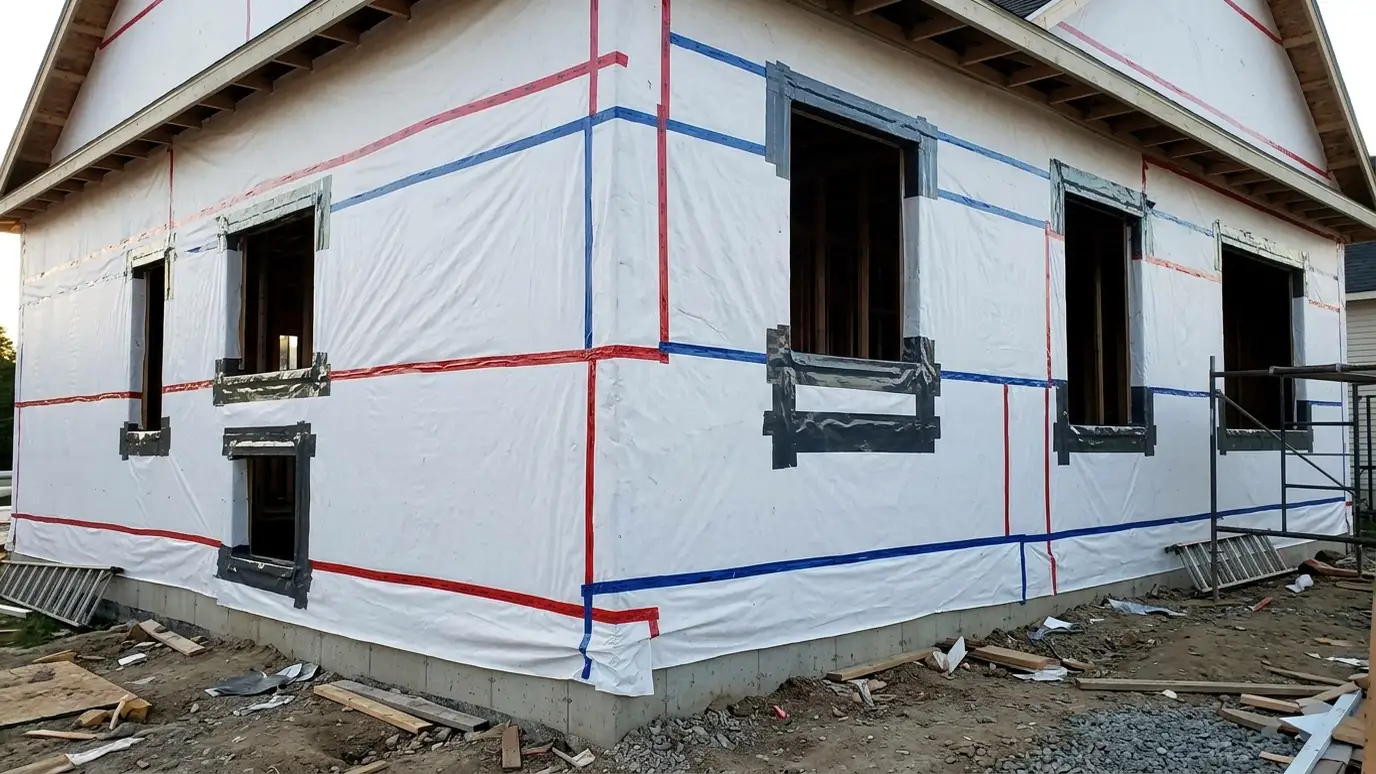
That second layer is the weather barrier, made of house wrap or building paper plus flashing.
How house wrap works
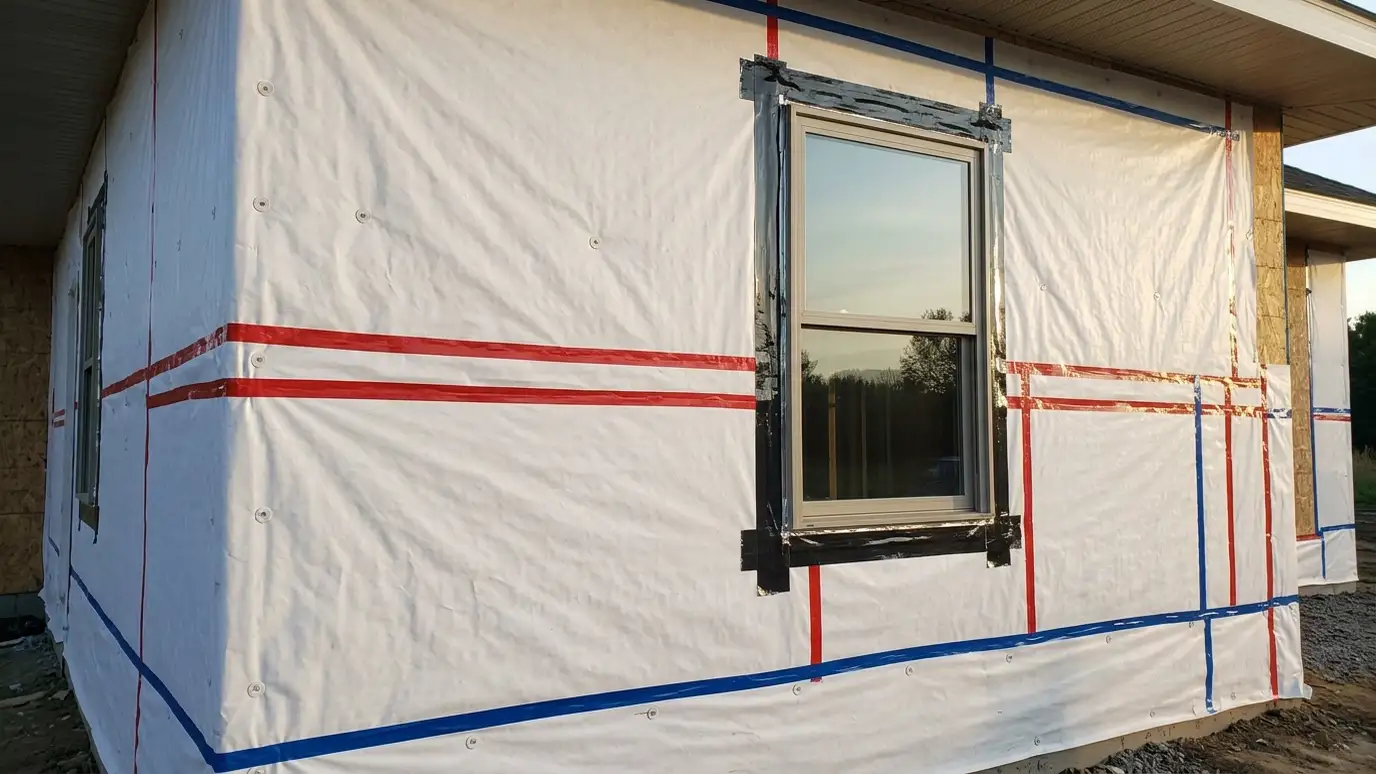
Wrap sheds liquid water but lets water vapor pass out. It is installed in overlapping courses, from the bottom up, so water always runs down and out.
Seams and penetrations should be taped. A wrap that is torn, loose or backward cannot do its job.
Flashing the openings
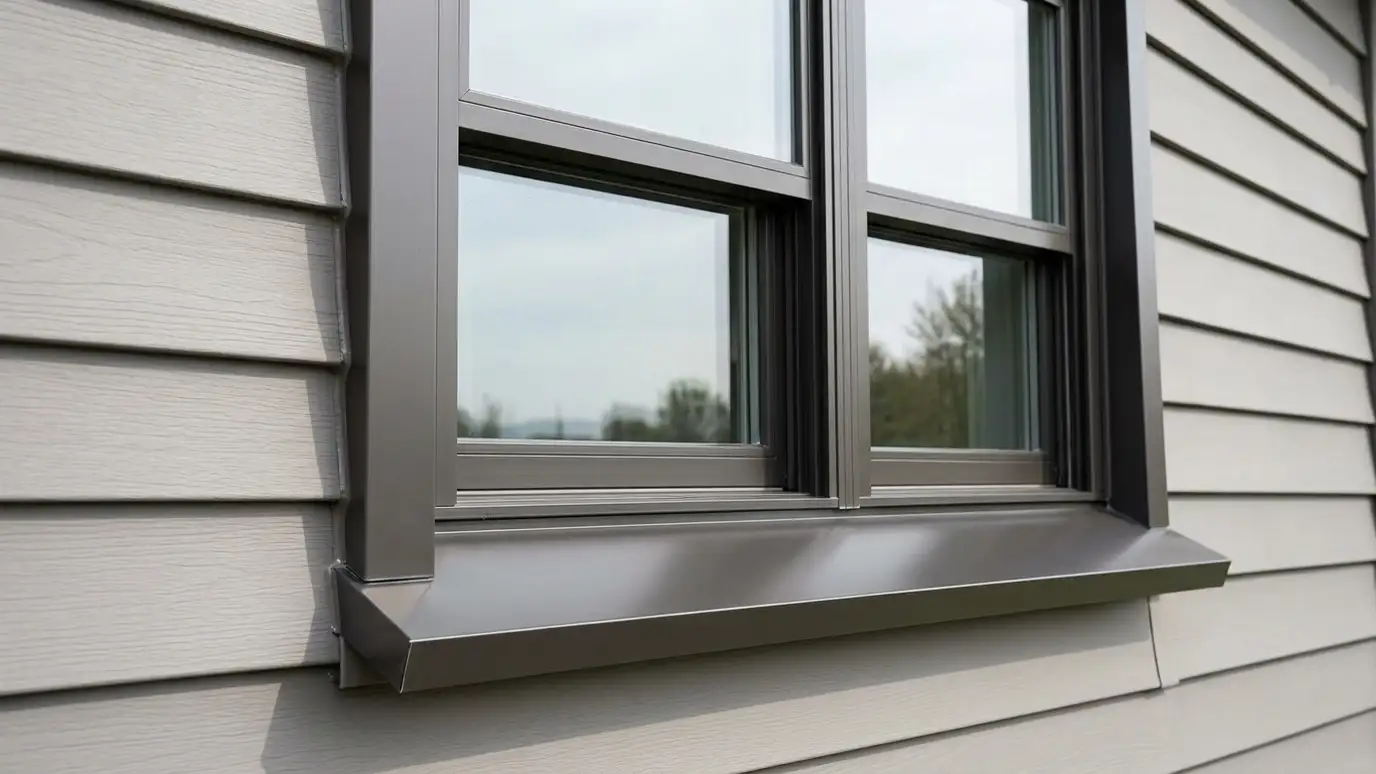
Windows and doors are the most common leak points. A proper installation includes a sloped sill pan, flashing tape up the sides and a head flashing, all lapped in the right order.
Details like kick-out flashing where a roof meets a wall are small but crucial.
Drainage gaps and rain screens
Some wall systems add a small gap behind the siding so water can drain and the wall can dry. These rainscreen designs are especially useful with wood siding and in humid climates.
Furring strips or special wraps create the gap.
Signs of moisture trouble
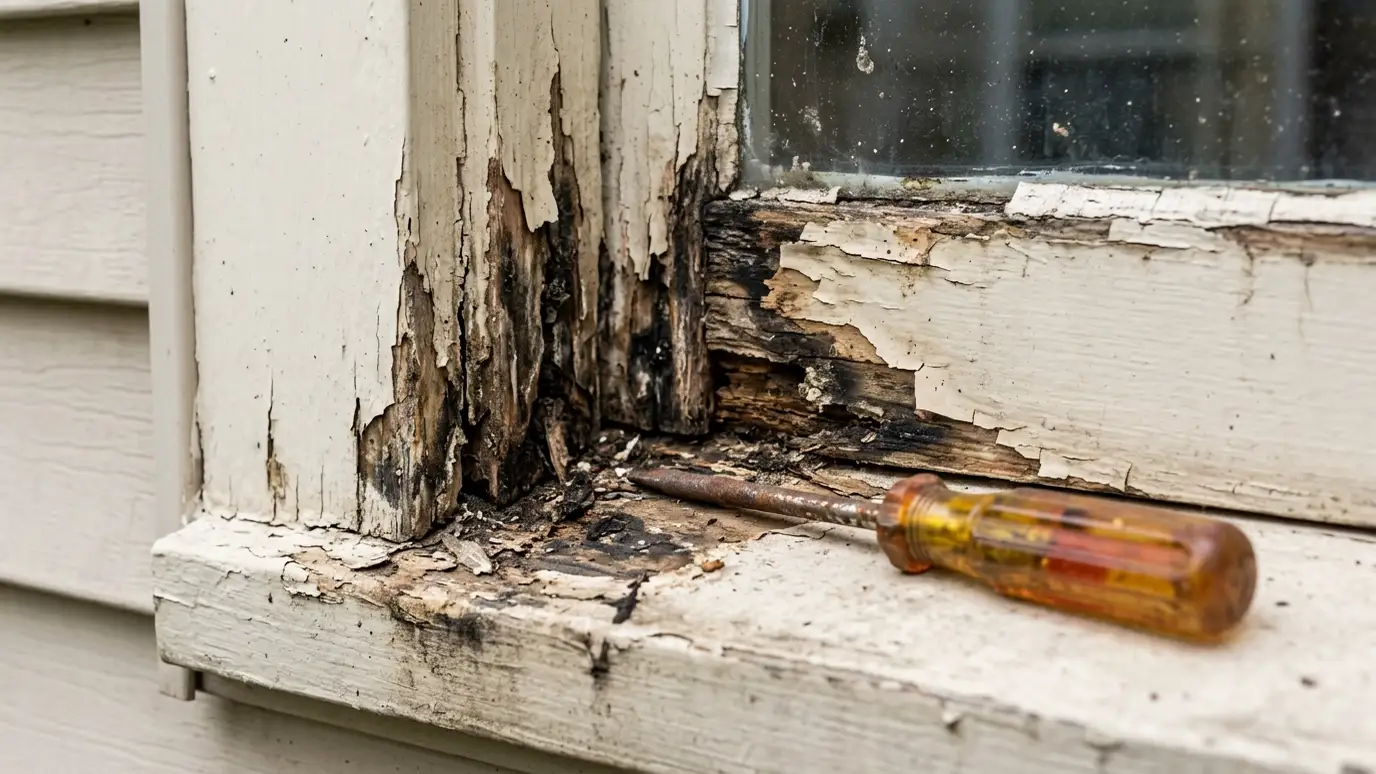
Stains below windows, soft trim, peeling paint, musty smells and bubbling interior paint can mean water is getting in. Mildew that keeps coming back may also be a clue.
Do not ignore them. Moisture damage grows with time.
Doing it right
A good siding job is a system: sheathing, barrier, flashing, siding, trim and sealant. Each layer supports the others.
Ask your contractor to show photos of the wall before the siding goes on.
Ask about the layers you cannot see, because they matter more than the siding you can.