How moisture enters
Water reaches walls through failed caulk, missing flashing, clogged gutters, splash from roofs and sprinklers and gaps around windows and penetrations. Humidity also condenses on cool surfaces inside walls.
Small leaks over many seasons cause the biggest damage.
Early warning signs
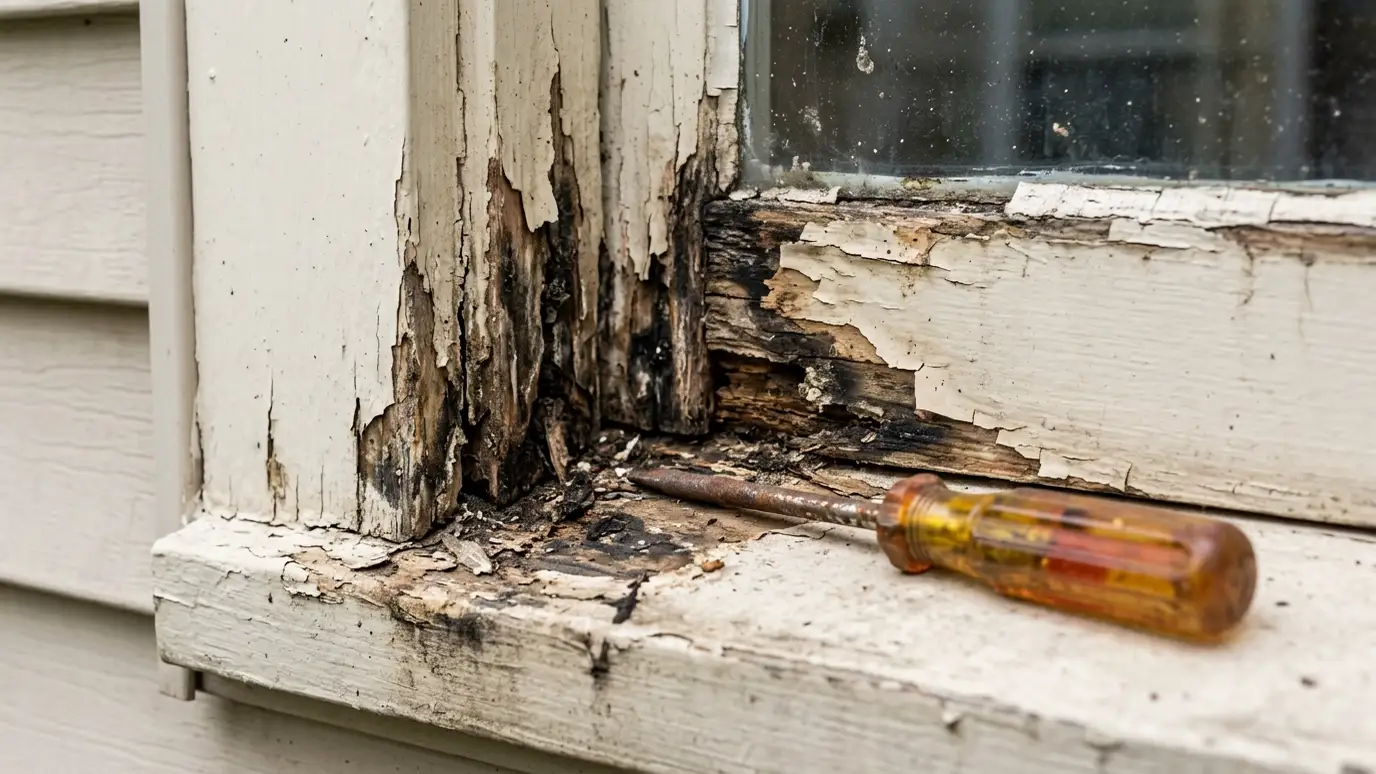
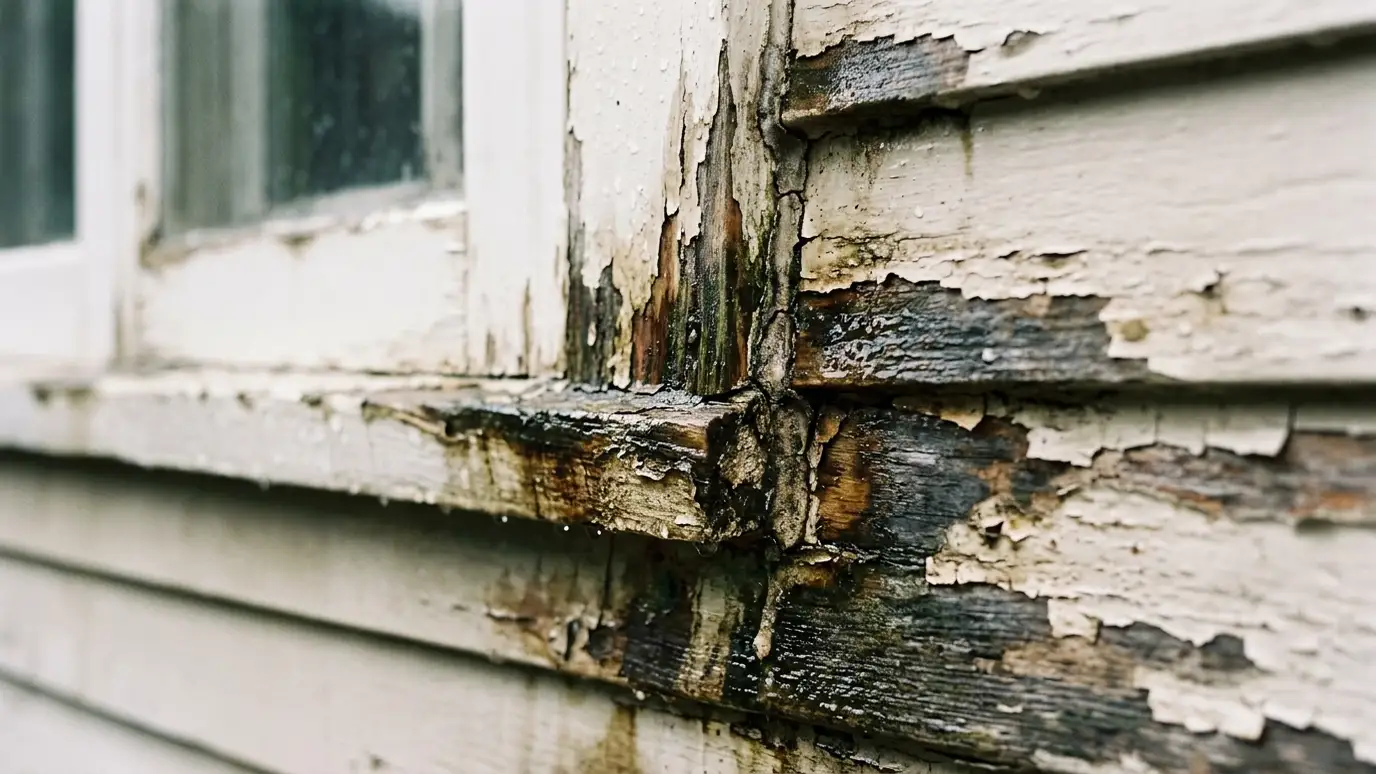
Peeling paint, swollen boards, soft trim, dark streaks, musty smells and stains on interior walls can all point to moisture. Mildew that returns quickly is another clue.
Check after heavy rain, when leaks show.
Gutters and roof edges
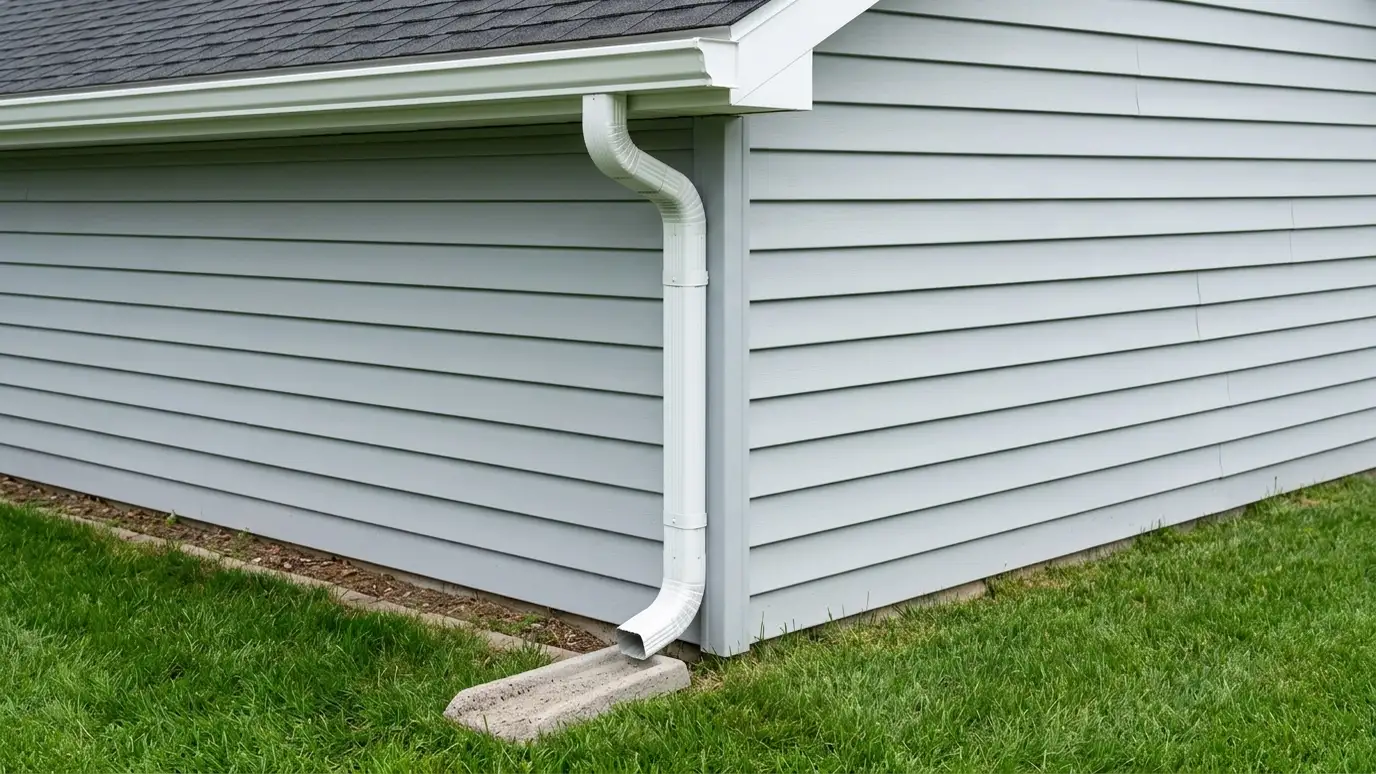
Many siding problems start at the roof. A clogged gutter overflows down the wall, and a missing kick-out sends water behind the siding at a roof-to-wall joint.
Fixing the roof edge is often the real cure.
Windows and doors
The head and sill of each opening need flashing and sealant. Water can leak at corners and behind trim, then rot the wall below.
Check caulk every year and renew it when it cracks.
Mold and mildew
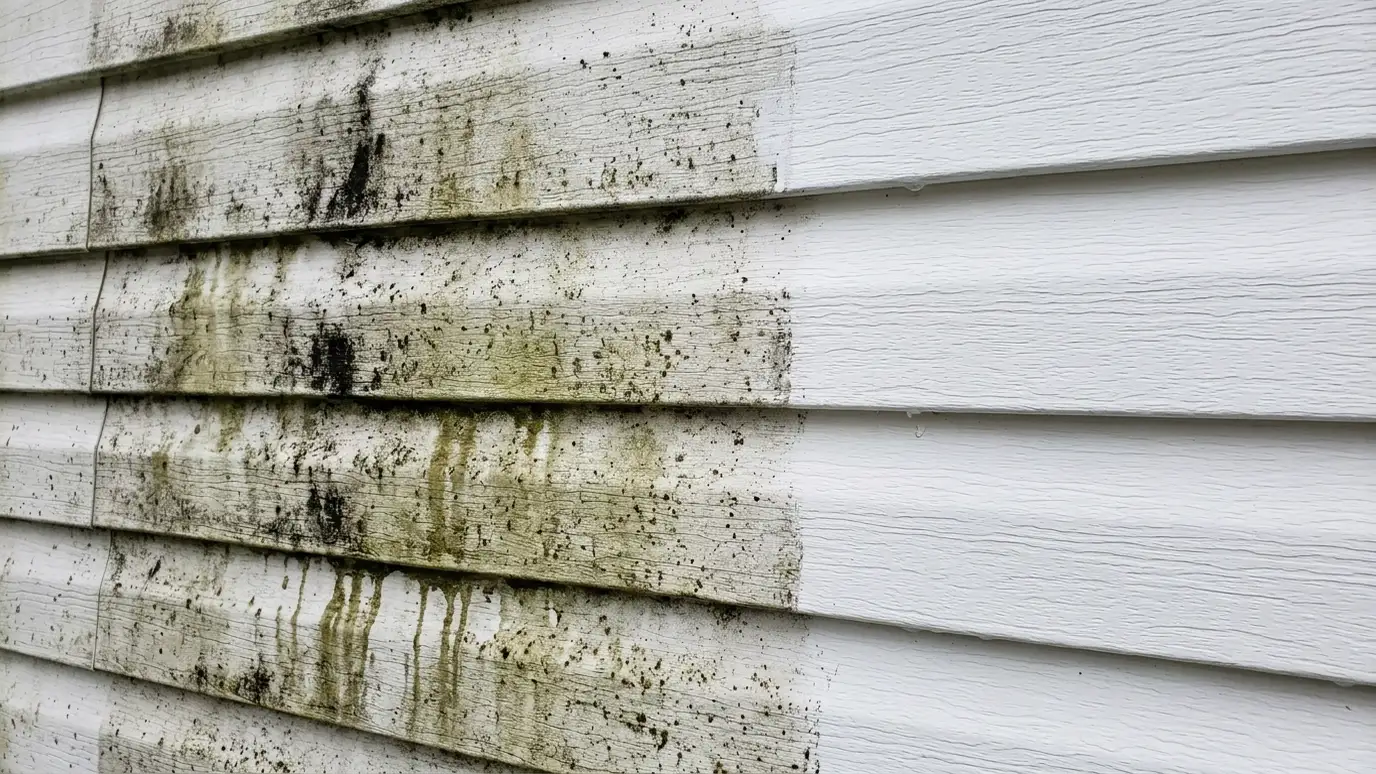
Surface growth is mostly cosmetic and washes off, but growth inside walls is a health and structural concern that needs a specialist. Do not paint over it.
Dry the area and fix the source before repairs.
Fixing it properly
Find the source, remove wet and rotten material, replace it with sound, sealed pieces, flash correctly and then finish. Painting over damp wood only hides the problem.
Photos before and after help you and any future buyer.
Fix the source of the water first, then repair the damage, then finish the surface.